Equine infectious anemia (EIA) is a bloodborne infectious disease of equids caused by Lentivirus equinfane. Clinical outcomes range from a subclinical carrier state to a range of clinical signs of variable severity, including fever, depression, thrombocytopenia, anemia, jaundice, dependent edema, increased heart and respiration rates, hemorrhages on mucous membranes, epistaxis, muscle weakness, and collapse, as well as death in a small percentage of cases. Diagnosis of EIA is usually based on serological testing and demonstration of antibodies against the virus in blood. No treatments or vaccines exist, and the disease is subject to testing and control measures in many countries.
Equine infectious anemia (EIA) is widespread throughout the world and is listed by WOAH as a notifiable disease. With the caveat that surveillance data might be limited, only a few countries can claim disease freedom, including Japan, Iceland, and probably most countries in the Middle East.
EIA continues to pose a threat to equine industries globally because of the potential risk of virus spread through international movement of horses. Of the equid species known to be susceptible to the virus, horses and ponies are more likely to develop severe clinical manifestations of the disease than are donkeys or mules, in which infection is frequently subclinical. However, many horses also experience subclinical infection after initial exposure to the virus.
Etiology and Pathogenesis of Equine Infectious Anemia
The causative agent of equine infectious anemia is an RNA virus, classified in the Lentivirus genus, subfamily Orthoretrovirinae, and family Retroviridae. Equine infectious anemia virus was renamed Lentivirus equinfane in 2023. The virus contains two copies of a single-stranded RNA genome, which, after infection, undergoes reverse transcription to the proviral DNA that is subsequently integrated into the host genome.
In virus-infected equids, a very close relationship exists between the development of overt clinical signs of disease and the amount of virus present; however, the level of viremia can also fluctuate considerably in the absence of clinical signs. In infected animals, virus is found free in plasma or associated with monocytes and macrophages.
Virus burdens reach their highest levels during febrile episodes, after which they decline based on immunological control of viral replication. The virus concentration in tissues must reach a threshold level to trigger a clinical response. The potential of a viral strain to induce disease is largely due to its replicative capacity or pathogenicity in the infected host.
Disease pathology and clinical signs of EIA are largely caused by proinflammatory cytokines as well as by adaptive immune responses. Virus infection of macrophages interferes with host-cell gene expression, leading to increased production of proinflammatory mediators or cytokines—in particular, tumor necrosis factor alpha (TNF-alpha), IL-1-alpha, IL-1-beta, IL-6, and transforming growth factor beta (TGF-beta).
Fever stems from the activation of the arachidonic acid pathway and the resulting increased production of prostaglandin E2. Thrombocytopenia results from suppression of megakaryocyte colony growth by TNF-alpha and TGF-beta, as well as from immune-mediated platelet destruction. Platelets from infected horses have substantial amounts of bound IgG or IgM, and immune-mediated destruction contributes to both splenomegaly and hepatomegaly. Increased production of TNF-alpha may be partly responsible for the anemia that develops in equids suffering from EIA by virtue of its ability to inhibit erythropoiesis; the anemia may be further exacerbated by complement-mediated increased phagocytosis of RBCs. Glomerulonephritis and vasculitis leading to edema formation are likely immune complex–mediated.
It is likely that both cell-mediated and humoral immune responses are responsible for initial control of L equinfane infection (1). Once acute viral infection has been controlled, the infected individual will remain free of overt clinical signs of disease until the emergence of a variant virus (a so-called quasispecies) that can evade the host’s immune system, allowing for recurrence of clinical signs and renewed viremia.
Epidemiology and Transmission of Equine Infectious Anemia
All equids with equine infectious anemia remain lifelong carriers of L equinfane. Such individuals constitute the natural reservoir of the virus and ensure its perpetuation in equid populations over time. The combination of frequent carriers and mechanical transmission by blood-feeding insects explains why EIA is found in equine populations in a wide range of climatic zones and countries around the world.
Although EIA is usually considered a bloodborne infection, all body fluids and tissues should be regarded as potentially infectious, especially during febrile episodes when viral levels are high. Evidence of L equinfane has even been found in nasal swabs and in swabs taken from the buccal cavity and genitalia, and it is also likely to be present in milk. L equinfane can also be passed to foals in utero.
Evidence in support of venereal transmission is questionable; such transmission is unlikely to occur unless semen is contaminated with blood in the case of an infected stallion.
Circumstantial evidence suggests that L equinfane might, under exceptional circumstances, also be transmitted via the respiratory route through aerosolization of blood when an infected horse is bleeding from the nostrils.
Transmission of L equinfane by biting flies is purely mechanical because the virus does not replicate in the insect. The chance of transmission of L equinfane among horses in close proximity has been shown to be directly proportional to the volume of blood retained on the mouthparts of an insect after feeding—hence, horse flies, deer flies, and, to a lesser extent, stable flies are the most efficient vectors of the virus.
Because the bites are irritating and trigger host defensive behavior that interrupts the flies' feeding routine, flies seek out another susceptible host to complete their blood meal. Distance from an infected animal is an important factor influencing risk of infection for other horses, as the likelihood of tabanids transferring to another horse following an interruption of feeding decreases with increased distance (2).
Natural L equinfane transmission is influenced by the number and species of flies, density of the horse population, level of viremia in the host, and quantity of blood transferred. Infections are especially common in hot, humid countries with very large biting fly populations. Clinically affected, febrile horses are more likely to transmit the disease than animals with inapparent infections.
Aside from the natural transmission of the virus by blood-feeding insects, the importance of iatrogenic transmission of L equinfane cannot be overstated. Iatrogenic transmission contributes substantially to virus persistence in the horse population and is even considered the most common route of disease transmission in some countries. The disease can be readily transmitted iatrogenically through the reuse of blood-contaminated syringes and needles, surgical instruments, dental equipment, and IV sets and by the transfusion of infective blood or blood products. The virus is purported to persist for up to 96 hours on contaminated hypodermic needles.
Aside from proper hygiene measures, veterinarians performing transfusions of blood or plasma in their practices must adhere to the use of commercially licensed products and adequately tested donor animals.
Clinical Findings of Equine Infectious Anemia
The clinical findings and course of infection with L equinfane are variable, depending on the virulence of the virus strain, viral dose, and susceptibility of the horse. After an incubation period of 15–45 days or longer in naturally acquired cases of infection, typical cases of the disease have been described as progressing through three clinical phases:
An initial or acute episodelasting 1–3 days is characterized by fever, depression, and thrombocytopenia. Because these clinical signs can be mild and transitory, they are often overlooked or misdiagnosed.
Typically, this initial phase is followed by a prolonged period associated with the following clinical signs:
recurring episodes of fever
depression
thrombocytopenia
increased heart and respiration rates
anemia
icterus
petechiation on mucous membranes
epistaxis
dependent edema
muscle weakness
muscle atrophy
The interval between episodes can range from days to weeks or months. In most cases, episodes of disease subside within a year, and infected horses become inapparent carriers and reservoirs of L equinfane. Many of these horses remain clinically normal; however, some chronically infected horses can continue to experience recurrent episodes, varying from fever and thrombocytopenia to many of the extensive range of clinical signs that have been described. Such episodes are frequently associated with intercurrent infections and other sources of stress.
Although the foregoing represents the most commonly described clinical course of the disease, some outbreaks of EIA can be associated with peracute disease in which the primary viral infection is uncontrolled. This can result in a very high fever, severely decreased platelet counts, and, infrequently, acute depression and epistaxis leading to death. In view of the wide variation in response in natural cases of infection, confirming a diagnosis of EIA based solely on clinical grounds is not possible.
Lesions
Gross pathological lesions frequently observed in acute cases of EIA include enlargement of the spleen, liver, and abdominal lymph nodes; dependent edema; and mucosal hemorrhages. Chronic cases of infection are characterized by emaciation, pale mucous membranes, petechial hemorrhages on internal organs (especially spleen and kidney), enlargement of the spleen and abdominal lymph nodes, and dependent edema of the limbs and ventral abdominal wall (see ). Thrombosis of blood vessels has also been reported.

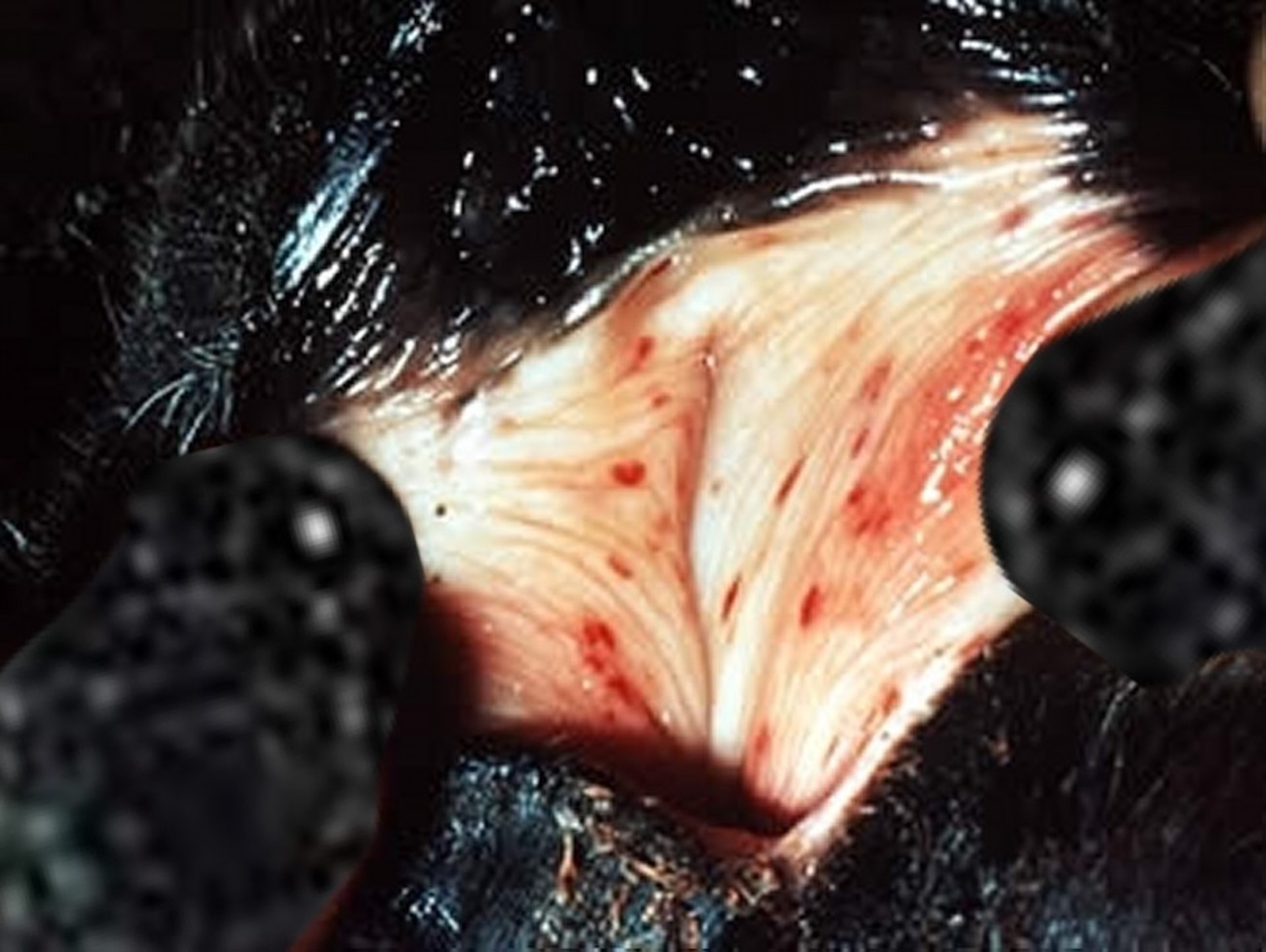
Petechiation of mucous membranes of a horse with equine infectious anemia.
Courtesy of Dr. Thomas Lane.
Histologically, there is nonsuppurative hepatitis and, in some cases, glomerulonephritis, periventricular leukoencephalitis, meningitis, or encephalitis. Ocular lesions can occur in chronically infected animals. Proliferation of reticuloendothelial cells is evident in many organs, especially in the liver, where hemosiderin accumulates in Kupffer cells. Perivascular accumulation of lymphocytes can occur in various organs.
Diagnosis of Equine Infectious Anemia
Serological testing
Clinical signs of acute equine infectious anemia are often nonspecific and not definitive of the disease. Accordingly, a provisional clinical diagnosis must be confirmed by demonstration of antibodies against the virus in blood. Laboratory confirmation of a suspect case of EIA needs to be pursued without delay. A wide range of infectious and noninfectious diseases can clinically resemble and be confused with EIA:
piroplasmosis
severe strongyloidiasis or fascioliasis
autoimmune hemolytic anemia and thrombocytopenia
Although the internationally accepted serological test is the agar gel immunodiffusion (Coggins) test, a variety of ELISAs, either competitive or synthetic antigen-based, are increasingly accepted because they can provide rapid results. ELISAs are often used for screening; however, because they can give a higher rate of false positives, all positive ELISA results must be confirmed by the Coggins test. When used in combination, ELISAs and agar gel immunodiffusion tests provide the highest level of sensitivity combined with specificity. The Western blot is a supplemental test that can be used in cases of conflicting results with other diagnostic tests.
A problem with available serological tests is that they can give negative results when testing sera that have been collected early in the course of infection. Whereas the vast majority of virus-infected horses will have seroconverted by 45 days, there have been exceptional cases in which the interval has been ≥ 90 days.
Pearls & Pitfalls
|
Virus detection assays such as RT-PCR are not routinely used to diagnose EIA but can be useful in research settings and for detailed viral monitoring. Notwithstanding their sensitivity, they may not detect virus in carrier horses with very low viral loads in the absence of viral replication. In addition, variation in the primer or probe-binding sites can lead to loss of test sensitivity over time and between geographical regions.
Although the animal inoculation test is highly sensitive for detection of L equinfane, it is no longer in regular use as a means of diagnosis of EIA for logistic, economic, and animal welfare reasons.
Treatment of Equine Infectious Anemia
No treatment available
No antiviral treatment or cure for equine infectious anemia exists. Because equids with confirmed disease are lifelong carriers of the virus, they are usually euthanized. The alternative to euthanasia is permanent isolation and quarantine of the infected animal at least 200 yards from all other equids on a site, along with insect control measures.
Prevention and Control of Equine Infectious Anemia
No safe and effective vaccine is available to prevent equine infectious anemia, and the disease is subject to testing and control measures in many countries. Without the benefit of prophylactic vaccination and because of the dire consequences of detecting an infected animal, horse owners are advised to implement an EIA control plan for their premises. An integral part of such a program should be annual testing of all horses. More frequent testing may be indicated in areas that previously experienced a high incidence of EIA.
All equines introduced to a herd should have a negative EIA test result before arrival or be isolated while tests are pending. Horses competing in shows or performance events should be accompanied by proof that they have been tested for EIA within a specific period of time. Travel regulations often include the need for EIA testing.
Vector control practices should be a part of any EIA prevention and control program. These should include routine application of insecticides and repellents as well as other insect control measures.
Any control program for EIA must emphasize how readily the causative virus can be transmitted indirectly from an infected individual to other equids through the reuse of contaminated needles, syringes, surgical or dental instruments, or other equipment. Strict observance of good hygiene and disinfection is essential to prevent iatrogenic transmission of EIA.
L equinfane is readily inactivated by most common disinfectants, such as bleach, ethanol, iodophor disinfectants, phenolic compounds, glutaraldehyde, and formalin. Because bleach-based and ethanol disinfectants are readily inactivated in the presence of organic material (eg, feces or soil), contaminated surfaces must first be cleaned thoroughly using soap and water before being treated with a disinfectant. Pressure washing soiled surfaces is contraindicated because of the risk of aerosolizing potentially infectious blood or other body fluids on wall or floor surfaces.
Specific measures to prevent and control EIA can be summarized as follows:
Infected horses become lifelong carriers and pose a risk of infection to other horses. Management options for an EIA-positive horse are euthanasia or lifetime quarantine, with permanent isolation at least 200 yards away from noninfected horses.
Prevention is key to stopping the spread of EIA.
Use a new sterile needle, syringe, and IV set for all injections or treatments.
Between horses, thoroughly disinfect dental, tattoo, and surgical equipment; lip chains; and bits. Completely remove all debris and blood with soap and water before disinfection.
Administer only commercially licensed blood or blood products. Test blood donors regularly for transmissible diseases, including EIA.
Keep open wounds clean and covered, if possible.
Require proof of a recent negative EIA test result upon introducing a horse onto a site for the first time.
Practice good fly control by regularly mucking out stalls, properly disposing of feces away from stabling areas, and using fly sprays or natural predators to minimize fly presence.
Zoonotic Risk of Equine Infectious Anemia
There is no evidence that L equinfane is a zoonotic agent and transmissible to humans.
Key Points
Equine infectious anemia is a bloodborne infectious disease of equids caused by the virus Lentivirus equinfane.
The principal mode of natural transmission of EIA is mechanical transmission by blood-feeding insects, especially horse flies and deer flies. Iatrogenic transmission also plays a major role.
Diagnosis of EIA is based on serological testing and demonstration of antibodies against the virus in blood.
No treatments or vaccines for EIA are available.
Prevention and control of EIA is based on identification and euthanasia or lifelong isolation of infected equids, avoidance of iatrogenic transmission of the virus, and implementation of vector control practices.
For More Information
Thieulent CJ, Carossino M, Reis JKPD, et al. Equine infectious anemia virus worldwide prevalence: A 24-year retrospective review of a global equine health concern with far-reaching implications. Vet Microbiol. 2025;306:110548.
Equine infectious anemia. American Association of Equine Practitioners infectious disease guidelines. 2019.
Equine infectious anemia. USDA Animal and Plant Health Inspection Service. Modified July 30, 2025.
Equine infectious anemia. Center for Food Security and Public Health. Iowa State University. Updated December 2022.
Cardeti G, Manna G, Cersini A, et al. Horse innate immunity in the control of equine infectious anemia virus infection: a preliminary study. Viruses. 2024;16(12):1804.
Also see pet owner content on equine infectious anemia in horses.
References
Leroux C, Cadoreé J, Montelaro RC. Equine infectious anemia virus (EIAV): what has HIV’s country cousin got to tell us?Vet Res. 2004;35(4):485–512. doi:10.1051/vetres:2004020
Barros ATM, Foil LD. The influence of distance on movement of tabanids (Diptera: Tabanidae) between horses. Vet Parasitol. 2007;144(3-4):380-384. doi:10.1016/j.vetpar.2006.09.041