Parturient paresis in dairy cows is a metabolic disturbance most commonly observed at the onset of lactation, after calving, when calcium excretion increases rapidly and blood calcium concentration acutely decreases concurrently; it can also occur in beef cows. Clinical signs associated with severe hypocalcemia include paralysis, sternal recumbency, and cold extremities within 48 hours of parturition. Diagnosis is based primarily on clinical signs and response to treatment with IV calcium. Preventive measures include making prepartum nutritional adjustments, such as implementing a negative dietary cation-anion difference diet or feeding a phosphorus binder.
Parturient paresis has been documented in dairy cows for more than 200 years. Cows affected by this common disorder have acute hypocalcemia that causes acute to peracute, afebrile, flaccid paralysis at or soon after parturition. Other clinical signs include changes in mentation, circulatory collapse, and ruminal bloat.
Etiology of Parturient Paresis in Cows
Dairy cows are at considerable risk for hypocalcemia at the onset of lactation, when daily calcium excretion suddenly increases from approximately 10 g to approximately 30 g per day. This increase in excretion stresses calcium homeostasis and can cause blood calcium concentrations to fall well below the normal lower reference range of approximately 2.12 mmol/L (8.5 mg/dL). In healthy cows, blood calcium concentrations typically decrease around the onset of parturition but recover quickly within the first few days of lactation. Cows with parturient paresis have a more profound decrease in blood calcium concentration, which typically falls to < 1.5 mmol/L (6.0 mg/dL).
Hypocalcemia initially causes hyperexcitability of the nervous system, which typically progresses to decreased strength of muscle contractions and paresis.
Parturient paresis can occur in cows of any age; however, it is most common in high-producing dairy cows entering their third or later lactations. The incidence is higher in Jersey and Guernsey breeds.
Clinical Findings and Diagnosis of Parturient Paresis in Cows
Recumbency around the time of parturition
Hyperexcitability that progresses to flaccid paralysis
Diagnosis based on clinical signs, timing, and response to treatment
Most cases of parturient paresis in cows occur between the onset of parturition and approximately 3 days into lactation. Besides causing parturient paresis, hypocalcemia can contribute to dystocia, uterine prolapse, retained fetal membranes, metritis, abomasal displacement, and mastitis.
Parturient paresis has three discernible stages. In stage 1, cows are standing and ambulatory; however, they show clinical signs of hypersensitivity and excitability. Other clinical signs might include mild ataxia, fine tremors over the flanks and triceps, ear twitching, head bobbing, restlessness, shuffling of the rear feet, and bellowing.
If calcium treatment is not instituted during stage 1, cows will likely progress to stage 2, which is more severe.
Cows with stage 2 parturient paresis are paretic to the point that they cannot stand. They do, however, have enough muscle control to maintain sternal recumbency. Typical clinical signs at this stage include obtundation, anorexia, dry muzzle, subnormal body temperature, and cold extremities.
Auscultation of cows in stage 2 reveals tachycardia and decreased intensity of heart sounds as a result of impaired cardiac contractility. Peripheral pulses are weak.
Smooth muscle paralysis in stage 2 leads to GI stasis, which can manifest as bloat, failure to defecate, and loss of anal sphincter tone. An inability to urinate may manifest as a distended bladder on rectal examination.
Cows in stage 2 often tuck their head toward their flanks in a position commonly referred to "autoauscultatory," because it appears as though the cow is listening to its own heart. If the cow is able to extend its head, an S-shaped curve to the neck may be present because of asymmetry of the cervical musculature.
Cows in stage 3 parturient paresis lose consciousness progressively to the point of coma. They are unable to maintain sternal recumbency and lie flat on their sides. They have extreme muscle flaccidity, may be unresponsive to stimuli, and can have severe bloat. As cardiac output worsens, heart rate can approach 120 bpm, and peripheral pulses might be undetectable.
If untreated, cows in stage 3 might survive only a few hours.
Diagnosis of parturient paresis is often based on clinical evaluation and response to treatment. Few accurate cowside diagnostic methodologies exist, and those that do are often expensive. Blood can be collected before treatment in a non-anticoagulant tube and submitted for analysis of total calcium concentration if the cow does not respond to treatment.
Differential diagnoses for parturient paresis in cows include the following:
toxic mastitis
toxic metritis
other systemic toxic conditions
traumatic injury (eg, stifle injury, coxofemoral luxation, fractured pelvis, spinal compression)
calving paralysis syndrome (damage to the L6 lumbar roots of sciatic and obturator nerves)
compartment syndrome
other metabolic disorders (eg, hypomagnesemia, hypophosphatemia)
Some of these diseases, in addition to aspiration pneumonia, can also occur concurrently with parturient paresis or as complications of it.
(Also see Bovine Secondary Recumbency.)
Treatment of Parturient Paresis in Cows
Oral or subcutaneous calcium administration for standing cows
IV calcium infusion for recumbent cows
Prevention of hypocalcemic relapses in all affected cows
Recumbent cows are at extremely high risk for muscle and nerve damage; therefore, treatment of parturient paresis must be prompt. Excessive exogenous calcium administration increases the risk for hypocalcemic relapse. The lowest dose of calcium needed to restore normal blood calcium concentration should be used.
Pearls & Pitfalls
|
Cows with stage 1 parturient paresis (ie, cows that are still standing) should be treated with an oral calcium supplement or subcutaneous calcium infusion. Oral calcium is rapidly absorbed into the bloodstream and poses no risk for subsequent hypercalcemia followed by a rebound hypocalcemia. If oral calcium is the selected treatment, one bolus dose should be given, followed by a second bolus dose 12 hours later. However, in the author's experience, oral calcium, unless administered very early in stage 1, does not prevent progression to stage 2; thus, a single infusion of 23% calcium gluconate solution, 500 mL, SC, is recommended, followed by oral calcium supplementationto prevent a rebound hypocalcemia.
The preferred approach to oral calcium supplementation is an acidogenic source of calcium (usually calcium chloride or calcium sulfate) in a bolus formulation. Acidogenic sources of calcium are readily available and promote the cow’s own calcium homeostasis by enhancing parathyroid hormone (PTH) receptor responsiveness. The efficacy of oral supplementation depends on the solubility and absorption of the type(s) of calcium salts administered.
Although calcium boluses from different manufacturers may vary slightly in the amount of calcium they contain, a standard dose of a typical commercial bolus formulation of oral calcium provides 40–55 g of elemental calcium. Blood calcium increases to peak concentrations within 30 minutes of oral administration and equals approximately 4 g of IV calcium. Oral calcium administration of a standard dose does not cause hypercalcemia, does not contribute to hypocalcemic relapses, and does not increase blood glucose. Higher doses could cause uncompensated metabolic acidosis, decreased feed intake, and increased risk for hypocalcemic relapses.
Bolus formulations of oral calcium are the safest means of providing oral calcium supplementation. Oral paste, gel, or liquid formulations of supplemental calcium are not recommended because they pose an unnecessary risk for aspiration and pharyngeal irritation. Oral calcium boluses should include a coating to protect the cow from mucosal damage should the bolus remain in contact with pharyngeal or esophageal mucosa.
Nonacidogenic sources of calcium (usually calcium propionate) can be used for oral supplementation; however, they are not preferred for cows in stage 1 parturient paresis. Oral calcium propionate requires a higher dose of elemental calcium (≥ 100 g), does not enhance the cow’s own calcium homeostatic mechanisms, and unnecessarily increases blood glucose at a time when many cows are hyperglycemic. Oral calcium propionate is best reserved for use 2 or more days after calving.
Subcutaneous infusion of calcium (23% calcium gluconate solution, 500 mL, SC, once) can be irritating so it should ideally be divided and administered in at least two places caudal to the shoulder blades. Strict asepsis is necessary to prevent infection at the injection site. Solutions containing formaldehyde or dextrose should not be administered subcutaneously, because they are highly irritating. Subcutaneous infusion immediately increases blood calcium concentration, and concentration peaks in approximately 4 hours. The increase in blood calcium concentration is greater after subcutaneous infusion than after oral calcium bolus administration but less than after IV calcium infusion.
Depending on how low a cow's blood calcium concentration is at the time of treatment, subcutaneous calcium infusion may cause rebound hypocalcemia. Administration of oral calcium 4–8 hours after subcutaneous calcium infusion is warranted to prevent this rebound.
Cows with stage 2 or 3 parturient paresis (ie, recumbent cows) require immediate correction of their hypocalcemia by IV calcium infusion. The standard treatment for an adult dairy cow, although it is empirical, is 23% calcium gluconate solution, 500 mL, IV, once. The solution must contain boric acid to solubilize the calcium gluconate and stabilize the solution; thus, it may be labeled as calcium borogluconate.
This standard IV treatment provides 10.7 g of elemental calcium, which is more than sufficient to restore normocalcemia, even in the largest cows with the most profound hypocalcemia. A lower dose of IV calcium is probably ideal for most cows; however, lower doses have not been adequately investigated.
Calcium infusion products vary slightly in different parts of the world; most provide 8–12 g of calcium per infusion, which is reasonable.
Many products marketed for treatment of hypocalcemia include phosphorus, magnesium, glucose, or potassium, in addition to calcium. No additional electrolytes are needed to treat parturient paresis, and some could be harmful. Calcium gluconate alone is the best choice for IV treatment of parturient paresis.
The jugular vein is the preferred site for IV calcium infusion. Asepsis at the injection site and accurate placement of the needle within the lumen of the jugular vein are necessary to lower the risk for thrombosis and perivascular leakage.
The cranial superficial epigastric (mammary) vein may be more accessible than the jugular vein in some recumbent cows. However, the mammary vein is prone to thrombosis and phlebitis and should be used only when neither jugular vein is available.
Intraperitoneal injection of calcium can be effective; however, it poses substantial safety concerns for the cow. Placement of the needle is blind, which could lead to retroperitoneal, perirenal, or intraluminal deposition of the calcium solution. Intraperitoneal injection could also damage a viscus and cause peritonitis.
The response to IV calcium infusion in cows with parturient paresis is usually immediate and rewarding. Response to IV treatment is the main means of confirming the diagnosis.
It is an excellent practice to routinely collect a pretreatment blood sample before starting the IV calcium infusion. If the cow does not respond favorably, this sample can be submitted up to 14 days after sample collection, if stored in a working refrigerator, for laboratory confirmation of hypocalcemia. Blood samples collected after IV calcium infusion cannot be used for diagnostic purposes, because the calcium concentration has been confounded.
A typical response to IV calcium infusion in cases of parturient paresis includes declining heart rate and increasing pulse intensity as cardiac contractility is restored. Muscular paresis is reversed, resulting in muscle tremors and attempts by the cow to rise. It is generally expected that after treatment, approximately 75% of recumbent cows are able to rise within 2 hours. Preexisting musculoskeletal and nerve damage is the main reason cows might remain recumbent after successful correction of hypocalcemia.
Pearls & Pitfalls
|
IV infusion of calcium transiently raises blood calcium concentrations to nearly twice the normal upper limit. This transient hypercalcemia puts cows at risk for fatal cardiac arrhythmia. Therefore, calcium-containing solutions should be administered slowly (over 10–20 minutes) while cardiac rhythm is monitored by auscultation or carotid pulse. If severe dysrhythmias or bradycardia develop, infusion should be stopped until a normal heart rhythm returns. Animals with endotoxemia are especially prone to dysrhythmias in response to IV calcium treatment.
Transient hypercalcemia resulting from IV calcium infusion also poses a risk for hypocalcemic relapse. Hypercalcemia shuts down a cow’s efforts to mobilize its own calcium stores by halting PTH release and triggering calcitonin secretion instead. It is generally expected that approximately 25–40% of recumbent cows that are able to rise after IV calcium infusion will become recumbent again (usually in 12–24 hours), unless measures are taken to decrease the risk for relapse.
The best method for preventing hypocalcemic relapse is to provide adequate access to a well-formulated early lactation ration. The next best method is to administer oral calcium as described for treatment of stage 1 parturient paresis. Cows should be standing, alert, and able to swallow before receiving an oral calcium bolus.
Subcutaneous calcium infusion can also be used to prevent hypocalcemic relapses. Strict asepsis is necessary to prevent infection at the injection site. Solutions containing formaldehyde or dextrose should not be administered subcutaneously, because they are highly irritating.The best choice is a 23% calcium gluconate solution, 500 mL (the same as used for IV infusion), SC. This solution is still quite irritating and should ideally be divided and administered at multiple sites; however, in the author's experience, infusion of 500 mL into a single site, followed by massaging to spread the calcium to a larger subcutaneous area, is also efficacious.
Prevention of Parturient Paresis in Cows
Historically, prevention of parturient paresis in cows has been approached by feeding low-calcium diets during the dry period. A calcium deficit triggers calcium mobilization before calving and better equips cows to respond to the massive calcium needs at the onset of lactation. However, calcium intake must be limited to < 20 g per day for this method to be effective, and this level of dietary calcium restriction is nearly impossible under normal feeding conditions.
Therefore, there are two other common prepartum nutritional feeding methods for preventing parturient paresis without calcium restriction:
a negative dietary cation-anion difference (DCAD) diet
a diet supplemented with a phosphorus binder, such as sodium aluminosilicate (zeolite A)
A negative DCAD diet is achieved by feeding cows an acidogenic diet for approximately 3 weeks before calving. This approach creates a compensated metabolic acidosis (as opposed to a cow’s normally alkalotic state), increases GI calcium absorption, improves PTH receptor responsiveness, and mobilizes more calcium from bone.
DCAD, calculated as milliequivalents of [(Na + K) – (Cl + S)], quantifies the ability of a diet to evoke an acidic or alkaline response. A prepartum diet with a DCAD between −50 and −150 mEq/kg of diet dry matter is generally optimal for the prevention of parturient paresis. Acidogenic diets for prepartum cows are created by selecting feed ingredients that have an inherently low DCAD (usually low-potassium or high-chloride forages) and by adding supplemental anions (preblended hydrochloric acid or anionic salts such as calcium chloride, magnesium chloride, calcium sulfate, and magnesium sulfate).
It is challenging to consistently optimize dietary acidification, because the mineral content of forages can change rapidly during the mixing and feeding of rations. Frequent monitoring of urinary pH allows for dietary adjustments to maintain optimal acidification, which is a mean urinary pH of approximately 6.5. Urinary pH < 5.5 suggests overacidification, uncompensated metabolic acidosis, and impaired dry matter intake. Urinary pH > 7.5 suggests metabolic alkalosis, impaired PTH responsiveness, and inadequate protection against hypocalcemia.
Urinary pH should be monitored approximately twice weekly in prepartum cows being fed acidogenic diets. Frequent pH testing allows for prompt adjustment of the dose of supplement anions. Any cow on an acidogenic diet for more than 24 hours is eligible for urinary pH testing, and a minimum of eight cows should be tested.
Acidogenic diets are associated with decreased dry matter intake. Small decreases (< 10%) in intake are acceptable. However, large decreases could lead to inadequate energy intake and increased risk for energy-related disorders such as retained placenta, metritis, fatty liver, and ketosis after calving. The most common cause of excessive decrease in dry matter intake is overacidification, which will be detected by urinary pH monitoring. The dose of anions should be decreased until dry matter intake is restored.
An alternative strategy for preventing parturient paresis is to feed a prepartum phosphorus binder for at least 10 days before calving. These binders reduce phosphorus absorption from the gut, triggering release of phosphorus and calcium from bone into the blood, resulting in increased blood calcium concentrations. The amount of binder to deliver in the prepartum ration often targets 500 g per cow per day; however, the amount needed depends on the phosphorus concentration of the diet. Overfeeding of phosphorus binders can lead to decreases in dry matter intake, postpartum hematuria, and clinical hypophosphatemia.
Prophylactic treatment of cows with calcium around the time of calving may decrease the risk for parturient paresis; however, there is no evidence to support this practice. If prophylactic treatment with calcium is initiated, oral supplementation is the preferred route. Because oral calcium supplementation only raises blood calcium concentrations for a short period of time, a second bolus dose of calcium should be administered 12–24 hours later. See , which shows the expected kinetics of oral calcium supplementation (as well as IV supplementation) for cows without clinical signs of parturient paresis.

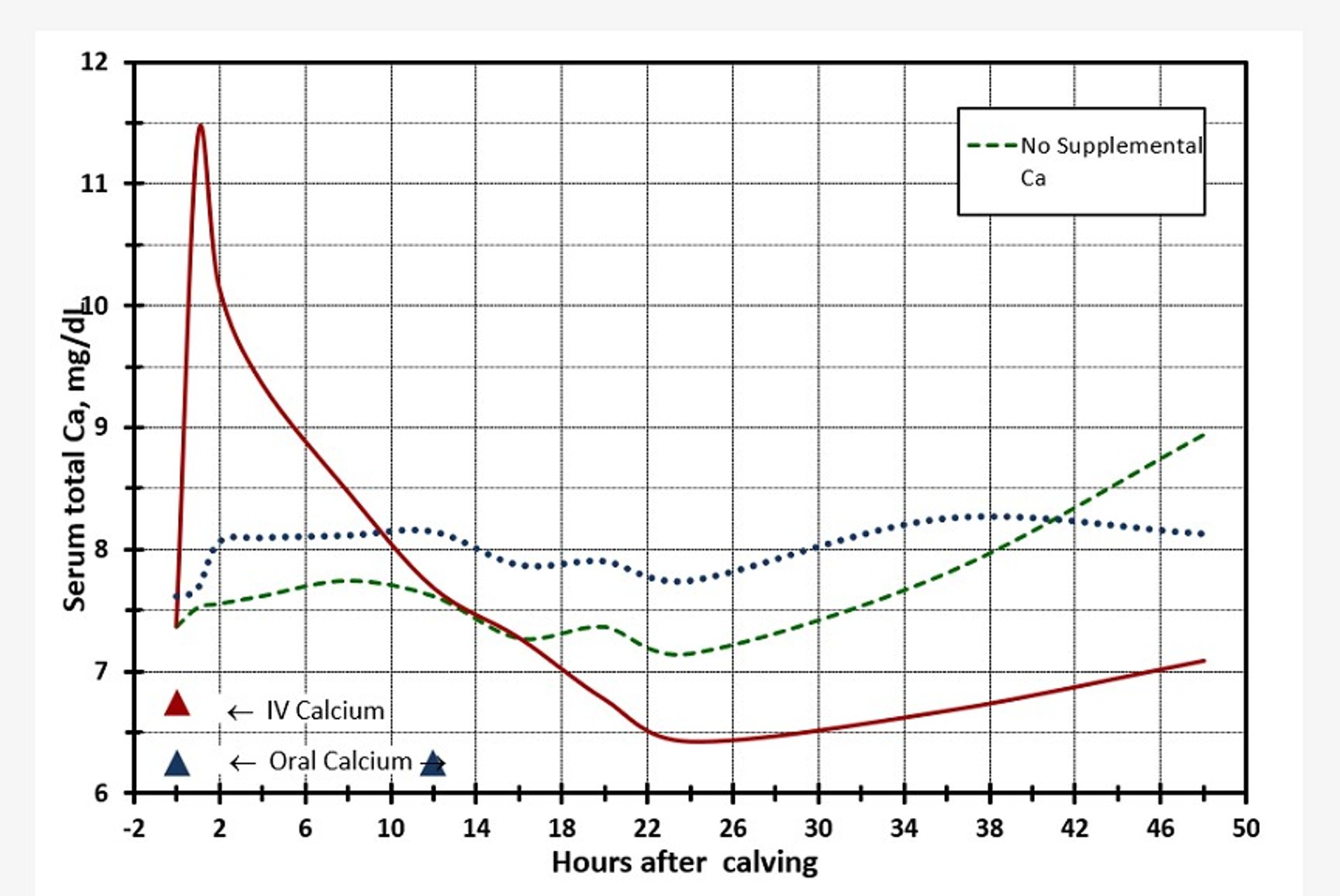
Extrapolated serum calcium concentration data for multiparous cows showing no clinical signs of hypocalcemia (N = 33) that were administered either no supplemental calcium (n = 11; dashed green line), IV calcium (n = 11; solid red line), or two oral calcium boluses (n = 11; dotted blue line).
IV calcium supplementation was a single 500-mL dose of a 23% calcium gluconate solution (10.7 g calcium) administered at the time of calving. Oral calcium supplementation was one fat-coated bolus of a mixture of calcium chloride and calcium sulfate administered at calving (43 g of calcium), followed by a second bolus 12 h later.
Note that the first serum sample was taken 1 h after IV calcium supplementation, which is well after the expected peak calcium concentration.
(To convert mg/dL to mmol/L, multiply by 0.25.)
Courtesy of Dr. Garrett Oetzel. Data extrapolated from Blanc CD, Van der List M, Aly SS, Rossow HA, Silva-del-Río N. Blood calcium dynamics after prophylactic treatment of subclinical hypocalcemia with oral or intravenous calcium. J Dairy Sci. 2014;97(11):6901-6906. doi:10.3168/jds.2014-7927.
Subcutaneous calcium (23% calcium gluconate solution, 500 mL, SC, once, ideally divided and administered in at least two places caudal to the shoulder blades) can also be used for prophylactic prevention of hypocalcemia, followed by oral calcium supplementation 4–8 hours later to prevent rebound hypocalcemia.
The prophylactic use of IV calcium for preventing hypocalcemia is discouraged. Cows supplemented with IV calcium at calving experience substantial hypocalcemia by 24 hours post calving (see ), which persists until at least 48 hours post calving and likely much longer.
Historically, supplementation with vitamin D3 and its metabolites has been attempted as a means of preventing parturient paresis. Although some approaches are clinically effective if the cow calves very near its due date, the risk for toxicity is too great for routine use.
Subclinical Hypocalcemia in Cows
Subclinical hypocalcemia, or dyscalcemia, in cows has long been considered a less severe form of clinical hypocalcemia. In cows with subclinical hypocalcemia, blood calcium concentrations drop after calving, reaching a nadir at around 24 hours after calving, yet clinical signs of hypocalcemia are absent. However, a postpartum drop in blood calcium concentration is a normal physiological response to lactation onset, provided that concentrations naturally rebound to normal values within a few days of calving.
In multiparous cows, beneficial postpartum blood calcium dynamics, defined as blood calcium concentrations > 2.2 mmol/L (8.8 mg/dL) at day 4 of lactation, are associated with high dry matter intake, low risk of early lactation disease, and good reproductive outcomes. Among normocalcemic postpartum cows at day 4 of lactation, those that had low blood calcium concentrations 24 hours after calving (but whose hypocalcemia resolved by day 4 of lactation) produce the highest quantity of milk within the herd.

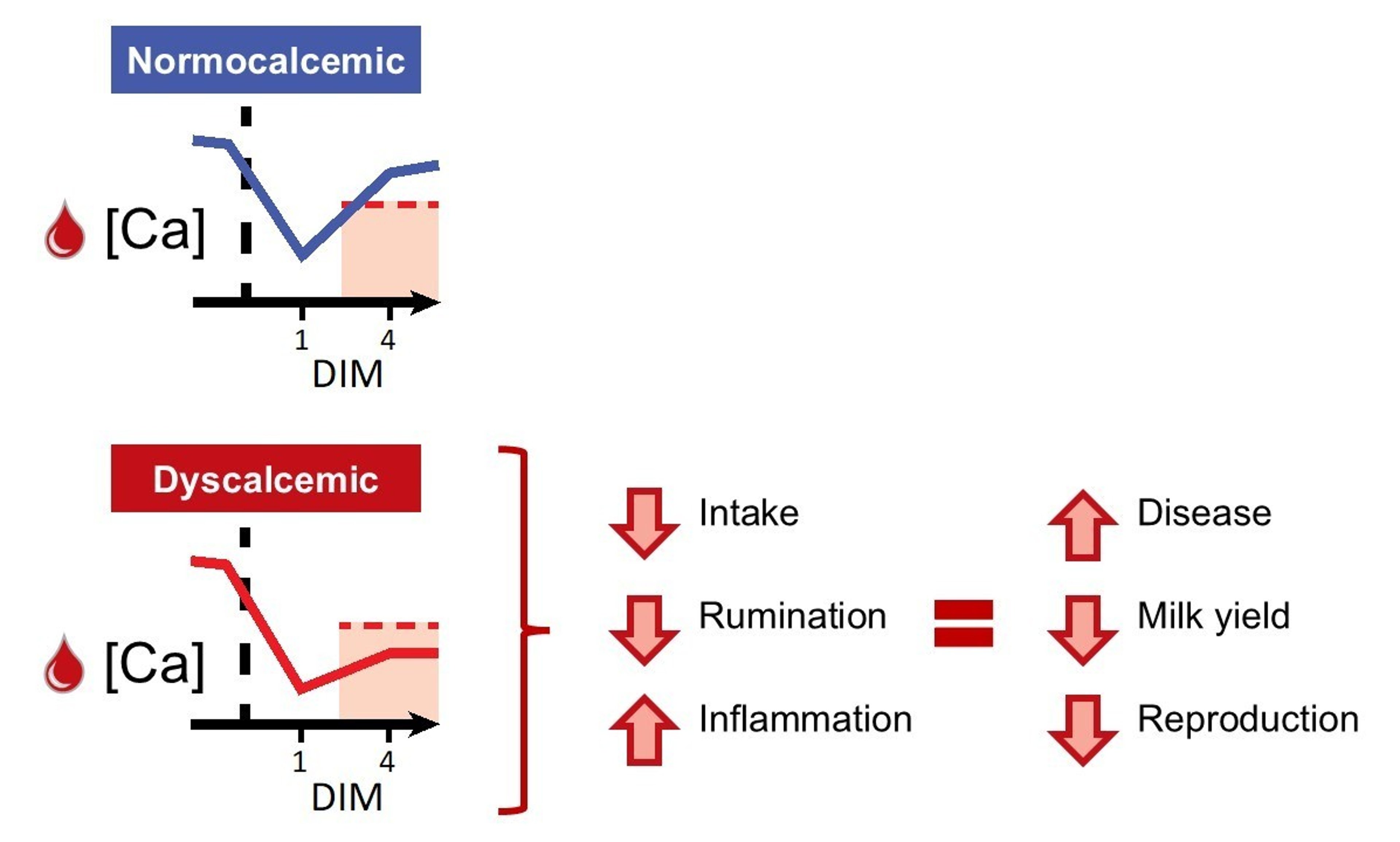
Schematic showing blood calcium dynamics between 1 and 4 days in milk (DIM) in normocalcemic (total blood calcium concentration > 2.2 mmol/L [8.8 mg/dL]) vs dyscalcemic (total blood calcium concentration ≤ 2.2 mmol/L) multiparous cows. The physiological characteristics and clinical outcomes associated with dyscalcemia are also outlined.
Courtesy of Dr. Jessica McArt and Dr. Jackson Seminara; schematic overview of data produced by the McArt Dairy Cow Lab.
Multiparous cows with poor postpartum blood calcium dynamics have dyscalcemia, defined as blood calcium concentrations ≤ 2.2 mmol/L (8.8 mg/dL) at day 4 of lactation. Dyscalcemic cows have low postpartum dry matter intake and are at increased risk for metritis and displaced abomasum; they also have worse reproductive outcomes than normocalcemic cows. They are more likely to be culled from the herd.
Dyscalcemic cows with low blood calcium concentrations 24 hours after calving have persistent subclinical hypocalcemia, whereas dyscalcemic cows with normal blood calcium concentrations at 24 hours after calving have delayed hypocalcemia. Dyscalcemic cows with delayed hypocalcemia produce the least milk within the herd. (See .)
Calcium supplementation at or within 24 hours of calving has not been shown to prevent dyscalcemia. This is likely because dyscalcemia develops as a result of reduced dry matter intake and excessive inflammation in the immediate postparturient period.
Key Points
Parturient paresis in dairy cattle is generally easy to recognize and treat.
Prompt and effective treatment is necessary to prevent secondary complications.
Treatment should include measures to decrease the risk for hypocalcemic relapse.
Prevention is always preferable to treatment and is usually accomplished by feeding an acidogenic diet or a phosphorus binder before calving.
For More Information
McArt JAA, Oetzel GR. Considerations in the diagnosis and treatment of early lactation calcium disturbances. Vet Clin North Am Food Anim Pract. 2023;39(2):241-259.