Lead poisoning in mammalian and avian species is characterized by neurological disturbances, GI upset, hematological abnormalities, immunosuppression, infertility, and renal disease. Clinical signs are dependent on the dose, route, and duration of lead exposure. Chelation therapy, cathartics, thiamine administration (in food-producing animals), and removal of lead from the environment are common treatment methods. Euthanasia should be considered for food-producing animals. Blood lead concentration or tissue analysis with supporting clinical and pathological abnormalities is essential to confirm the diagnosis.
Lead poisoning is a major concern worldwide. It has been reported in many species of mammals, birds, and reptiles (1).
Poisoning in animal populations can serve as a sentinel of environmental contamination and human health problems related to lead (2).
Lead is distributed throughout the environment and found in various forms (elemental, inorganic, and organic). Most veterinary exposures are to elemental lead (heavy, silvery-gray metal) or the inorganic salts.
In veterinary medicine, lead poisoning is most common in dogs, cattle, and companion birds. Lead poisoning in other species is limited by decreased accessibility, more selective eating habits, or lower susceptibility.
In cattle, many cases of lead poisoning are associated with inappropriate automotive battery (lead plates) disposal in pastures.
Other sources of lead include paint (artist and pre-1978 house paint), linoleum, lead weights, fishing sinkers, lead shot, solder, ceramic glazes on pottery (used as food and water bowls), putty, caulk, linoleum, wine cork covers, and contaminated foliage growing near smelters or along roadsides (3).
Renovation of old houses is a common route of exposure in small animals. The consumption, through grooming, of dust created from sanding lead-painted woodwork has been reported in cats (4). A chip of lead-based paint the size of a thumbnail can contain 50–200 mg of lead (5).
Lead has been reported in eggs from backyard chicken flocks associated with the ingestion of paint flecks (6). Because poultry are more resistant to clinical lead poisoning than most mammalian species, the deposition of lead in eggs with no apparent clinical signs in the bird can be substantial.
Waterfowl are exposed to lead through ingestion of spent shot and fishing sinkers. Scavenging of carcasses killed by lead shot can lead to lead poisoning; a representative example of this is the threat lead contamination poses to the critically endangered California condor (Gymnogyps californianus) (7).
Soil contaminated with lead can be another source in grazing animals. Young age, pica, and greater accessibility to lead are key risk factors associated with the toxicosis.
The amount of lead needed to cause toxicosis varies by species:
Cattle develop clinical signs at 10 mg/kg acutely or 6 mg/kg chronically (8).
Lambs develop problems at 4.5 mg/kg (8).
Goats are relatively resistant and need > 60 mg/kg to develop clinical signs (8).
Horses develop clinical signs at > 500-750 mg/kg acutely or 1.7-7 mg/kg per day chronically (8).
In dogs, the acute toxic dose of lead is 191-1000 mg/kg, and the chronic cumulative toxic dose is 1.8-2.6 mg/kg per day (5).
There is no good information regarding a toxic dose in cats.
Because of preventive measures (eg, removing lead from gasoline, replacing lead pipes, banning lead-based paint), the average blood lead concentration in humans, children and adults, has decreased (1). Blood lead concentrations of 30 mcg/dL can be associated with clinical lead poisoning in domestic small animal species (9).
Pathogenesis of Lead Poisoning
Animals that are shot develop lead poisoning only if the retained bullet/shot is in an acidic environment (synovial joint, GI tract, abscess, area of inflammation) (10). After ingestion, lead is ionized in the acidic environment of the stomach, which increases absorption (11).
Lead is absorbed primarily from the GI tract, and absorption is increased in animals with deficiencies of iron, zinc, vitamin D, or calcium (12). GI absorption of lead in adult animals varies from 5% to 15%, while young animals absorb lead more readily, up to 50% (1).
Lead is actively transported across the GI mucosa using the same transport mechanism used for calcium absorption, which explains the greater bioavailability of lead in immature, rapidly growing animals with an increased need for calcium (13).
Lead dust can also be inhaled (sanded lead paint). Once deposited in the lungs, lead is almost completely absorbed (14, 15). Dermal absorption of lead is poor; however, grooming behavior of cats can turn a dermal exposure into an oral exposure (14, 15).
Once absorbed, approximately 90% of lead is bound to RBCs. Within the RBC, lead is associated with the cell membrane, hemoglobin, and potentially other cell components (16).
Unbound lead is distributed widely into soft tissue and bone for long-term storage (1, 11). Bone remodeling from injury, weight loss, or chelation can release stored lead, resulting in clinical signs long after the original lead exposure (1).
Lead is excreted from the body by various routes. Most ingested lead is excreted in the feces without being absorbed (17). If lead is absorbed, it is filtered across the glomeruli and can accumulate in the renal tubular epithelium. Chelating agents will enhance the urinary excretion of lead. Small amounts of lead are secreted by the pancreas, and some lead is excreted in milk and eggs (6, 18).
Lead has a triphasic half-life in dogs of 12, 184, and 4591 days, because of redistribution (1). The half-life of lead in cattle is 9 days to several months (8).
Lead interferes with multiple processes within the body by various mechanisms. Most cellular damage is because of lead’s ability to substitute for a variety of polyvalent cations, especially calcium and zinc, at their binding sites (19). This effects numerous functions, including catalyzed reactions, maintenance of protein conformation, metal transport, energy metabolism, apoptosis, cell adhesion, inter- and intracellular signaling, and many enzymatic processes.
Lead competes with calcium ions, resulting in substitution of lead for calcium in bone.
Lead alters calcium flux across membranes, ultimately increasing the concentration of cytoplasmic calcium in many cell types (17, 20). Calcium-mediated cell death and chronic impairment in neuronal differentiation and synaptogenesis result (21).
In the CNS, an increase in intracellular calcium in the cerebrovascular endothelium related to the toxic effects of lead disturbs microfilaments and potentially other cellular components responsible for the integrity of tight junctions, contributing to cerebral edema (22).
The neurotoxicity of lead is related to multiple factors, including:
lipid peroxidation
excitotoxicity (ie, cell damage secondary to receptor overstimulation related to excitatory neurotransmitters such as glutamate)
alterations in neurotransmitter synthesis, storage, and release
alterations in expression and functioning of receptors
interference with mitochondrial metabolism
interference with second messenger systems
damage to astroglia and oligodendroglia
Lead produces oxidative damage to lipids and proteins as a result of release of iron, disruption of antioxidant mechanisms, and direct oxidative damage.
Lead can cross the placenta and is especially toxic to a fetus. It inhibits dendritic arborization in the brain and affects development of the hippocampus and cerebral cortex (23). Exposure during pregnancy has shown that there is a preferential accumulation of lead in fetal rather than maternal bone (24), and lead is also passed in milk (25).
Prenatal lead exposure has been linked to prolonged and irregular diestrus and decreased sperm counts in offspring (26). Multiple animal studies have also demonstrated behavioral abnormalities after intrauterine lead exposure (27).
Inorganic lead salts have been shown to be teratogenic in experimental animals (26).
By binding with sulfhydryl (–SH) groups of enzyme systems, lead interferes with enzymes involved in heme synthesis, such as δ-aminolevulinic acid dehydratase (ALAD) and ferrochelatase (28). This increases RBC fragility, delays erythrocyte maturation, and inhibits heme synthesis, all leading to anemia (see ).


Photomicrograph of canine blood showing metarubricyte (nRBC, nucleated red blood cell) and various sizes of red blood cells (indicating regeneration). Wright-Giemsa stain, 100X magnification.
Courtesy of Amy Schnelle, DVM, MS, DACVP.
The characteristic basophilic stippling of RBCs present in lead poisoning is because of accumulated ribosomal RNA aggregates (see and images). Lead inhibits pyrimidine-5’-nucleotidase (P5NT), leading to formation of these aggregates (29).


Photomicrograph of a blood smear from a dog with lead poisoning. Hematological abnormalities indicative (but not confirmatory) of lead poisoning include basophilic stippling in an erythrocyte (note variably sized multiple basophilic inclusions in one centrally located erythrocyte) and metarubricytosis (note the presence of a nucleated erythrocyte (metarubricyte RBC). Three mature neutrophils are also present. Wright-Giemsa stain; original magnification 1000X, oil immersion.
Courtesy of Dr. John W. Harvey.


Photomicrograph of bovine blood showing basophilic stippling (note variably sized multiple basophilic inclusions) of the red blood cells. This same type of basophilic stippling is present in cases of lead poisoning.
Courtesy of Amy Schnelle, DVM, MS, DACVP.
Alterations in synaptic transmission at the neuromuscular junction of visceral smooth muscle because of lead can alter intestinal motility and tone, leading to lead colic (30). Lead colic is very painful because of spasmodic contractions of the smooth muscles of the intestinal wall (31). This can be present in all species.
Clinical Findings for Lead Poisoning
The primary organ systems affected by lead are the GI, nervous, and hematopoietic systems. Clinical signs vary somewhat by species.
In cattle, CNS signs appear within 24–48 hours after exposure and include ataxia, blindness, salivation, spastic twitching of eyelids, jaw champing, bruxism, muscle tremors, and seizures (see and videos. Chronic lead poisoning in cattle has both CNS and GI signs (anorexia, rumen stasis, colic).


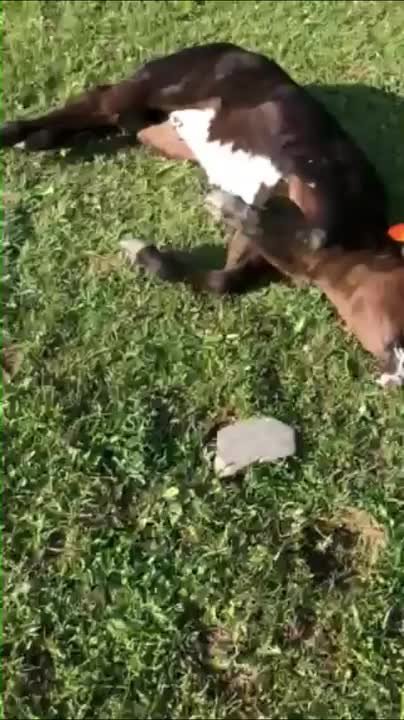
In horses, lead poisoning usually produces a chronic syndrome characterized by weight loss, depression, weakness, colic, diarrhea, laryngeal or pharyngeal paralysis (roaring), and dysphagia (choke) that frequently results in aspiration pneumonia.
In birds, crop stasis, anorexia, ataxia, loss of coordination, wing and leg weakness, and anemia are the most notable signs of lead poisoning.
In dogs and cats, acute lead poisoning is characterized by anorexia, behavior changes, ataxia, tremors, and seizures (32). Chronic lead poisoning can cause abdominal discomfort, vomiting, diarrhea, anorexia, lethargy, weight loss, anemia, behavior changes, intermittent seizures, and megaesophagus (which is rare in cats) (32).
Anemia develops as lead affects heme synthesis at several enzymatic steps, causing a shortened RBC lifespan and decreased erythrocyte replacement. With acute poisoning, lead-induced anemia is microcytic and hypochromic. As the toxicosis becomes more chronic, the anemia often changes to normochromic and normocytic (15).
Pearls & Pitfalls
|
Basophilic stippling and the presence of large numbers of nucleated RBCs (5–40 nucleated RBCs per 100 white blood cells) without evidence of severe anemia is suggestive of lead poisoning (32).
Lesions from Lead Poisoning
Animals that die from acute lead poisoning might have few observable gross lesions. Oil or metallic objects can be evident in the GI tract.
On histological evaluation, there can be damage to brain capillaries and interstitial edema of white matter, particularly in the cerebellum and spinal cord, along with flattening of the cortical gyri (33). Myelin degeneration within the cerebellum and cerebrum and spongiosis of deep cerebral structures have also been reported in cases of lead poisoning (34).
Intranuclear inclusion bodies can be found in the renal tubular epithelium, and degenerative changes can be present in the liver and kidneys because of chronic lead poisoning. Swelling of proximal renal tubular cells occurs early in lead poisoning, followed by tubular dilatation, atrophy of the tubular lining cells, and interstitial fibrosis. Glomerular sclerosis and interstitial scarring can develop with chronic lead exposure (35).
Placentitis and accumulation of lead in the fetus can result in abortion.
Diagnosis of Lead Poisoning
Blood lead concentration measurement
Postmortem testing
The diagnosis of lead poisoning is made by measuring blood lead concentration. Whole blood is the preferred sample, as more than 90% of circulating lead is bound to erythrocytes (32). Fortunately, small sample sizes can be used; amounts as small as 20 mcL of blood are often suitable.
Pearls & Pitfalls
|
Blood lead concentrations above 0.3–0.35 ppm (30–35 mcg/dL) indicate consequential lead exposure (32). With appropriate clinical signs, these concentrations support the finding of lead poisoning (36).
Because of the turnaround time for blood lead testing, other less specific diagnostic tests are often performed.
Radiography can reveal radiopaque lead objects. In chronic lead poisoning, radiopaque lines can be observed in the metaphyses.
Hematological abnormalities, which can be indicative but not confirmatory of lead poisoning, include anemia, anisocytosis, poikilocytosis, basophilic stippling, and metarubricytosis (nucleated RBCs).
For confirmatory testing postmortem in animal tissues, a toxic concentration of lead in the liver is 5–10 ppm, wet weight, and in the kidney is 50–200 ppm, wet weight (37). There can be marked differences in liver and kidney tissue concentrations in similar animals, and it is advisable to test both tissues.
For small animals, if the owner is unsure whether lead paint is in the home, home test kits (swabs) are available from most home improvement stores and other large retailers.
Lead poisoning can be confused with other diseases that cause nervous system or GI abnormalities.
In cattle, differential diagnoses for lead poisoning can include:
nervous coccidiosis
hypovitaminosis A
nervous acetonemia
organochlorine insecticide poisoning
brain abscess or neoplasia
Haemophilus infections
In dogs and cats, differential diagnoses can include:
hepatic encephalopathy
In birds and horses, many viral diseases are in the differential diagnoses.
Treatment of Lead Poisoning
Elimination of lead from the GI tract
Chelation therapy
Clinical signs of lead poisoning should be treated, with the animal stabilized first, followed by elimination of lead from the GI tract, then chelation therapy if needed (9).
For companion animals, seizures should be treated with benzodiazepines (eg, diazepam or midazolam). Fluid and electrolyte abnormalities secondary to GI signs should be corrected and antiemetics given if needed. Opioids might be needed for gastric pain.
Euthanasia should be considered for clinically affected food-producing animals. Treatment is potentially contraindicated in food-producing species because of concerns regarding food safety, prolonged treatment period, permanent degenerative damage, and poor prognosis.
If a dermal exposure has occurred, wash the animal thoroughly with liquid dish detergent and rinse with copious amounts of water.
Radiography can be used to determine if there is lead in the digestive tract. Lead should be removed before chelation therapy, as many chelating agents can actually enhance GI absorption of lead (38, 39).
Pearls & Pitfalls
|
If there is lead in the stomach, emesis or gastric/crop lavage can be attempted, depending on the species involved. Endoscopy can be employed to remove larger objects. A rumenotomy can also be used to remove metallic objects. However, surgery to remove particulate lead from the reticulum is rarely successful.
Activated charcoal does not bind to lead. Lead-containing shot or bullets in synovial joints or abscesses should be surgically removed.
Enemas or cathartics can be used to help empty the GI tract of lead. Sulfate-containing cathartics (magnesium or sodium sulfate) can bind with lead to form lead sulfate, which is not as well absorbed from the GI tract (36). Magnesium sulfate (Epsom salts) or sodium sulfate (Glauber’s salts) are dosed in dogs at 250 mg/kg, PO, once (40); cattle receive 400 mg/kg, PO, once (8). Efficacy of these cathartics is unknown, and they should not be used in patients with renal disease.
Bulk cathartics (whole wheat bread, canned pumpkin/squash, psyllium) can be used in small animals to help move objects out of the digestive tract.
Various lead chelation agents have been used in domestic animals. Calcium disodium EDTA, d-penicillamine, and succimer (DMSA) all have advantages and disadvantages.
For lead poisoning, chelation therapy can be used if the animal is showing clinical signs. However, it is not performed in clinically normal animals. Chelators should be chosen according to availability, severity of clinical signs, and whether there is still lead in the GI tract.
In food-producing animals, treatment with a chelator is not recommended. There is a poor prognosis related to lack of response to treatment, extensive supportive care associated with anorexia, a lack of approved chelation products, and appreciable tissue residues that create economic and public health concerns.
Prompt chelation therapy in companion animal species is often successful.
Calcium disodium EDTA has been the lead chelator of choice for several decades, and it is the most efficient parenteral chelating agent. It is used extralabel in all animal species.
Calcium disodium EDTA removes lead from blood and bone, which can increase blood lead concentration, precipitating clinical signs. Calcium disodium EDTA is nephrotoxic and can increase absorption of lead out of the GI tract. It can also bind essential minerals (calcium, copper, iron, zinc) (41). Dogs are dosed at 25 mg/kg, IV or SC, every 6 hours for 2–5 days (13).
Pearls & Pitfalls
|
Calcium disodium EDTA should diluted in 5% dextrose solution or saline (0.9% NaCl) solution prior to administration. If given IV, it should be diluted to 5% solution and given slowly; if given SC, dilute to a 10% solution (10 mg/mL [32]).
Injections of calcium disodium are painful. Decrease the dose as needed so as not to exceed 2 g/dog to decrease risk of nephrotoxicity (42). Rest the dog for 5 days, then repeat treatment as needed. Improvement is normally observed within 24–48 hours. Concurrent zinc supplementation should be given.
Cats receive calcium disodium EDTA at 27.5 mg/kg, SC, every 6 hours, diluted in 15 mL of LRS, for 5 days, repeated in 2–3 weeks if needed (42).
Although chelation is not generally recommended in food-producing animals, when it is administered, calcium disodium EDTA is administered at a daily dose of 110 mg/kg, IV or SC, divided in 3–4 doses, for 3 days; this treatment should be repeated 2 days later (43).
Bird dosing is 10-40 mg/kg, IM, every 12 hours for 5-10 days (44, 45).
Sodium EDTA should not be used for chelation in any species, because of the risk of hypocalcemia (46). Thiamine (2–4 mg/kg, SC, every 24 hours) alleviates clinical manifestations and decreases tissue deposition of lead (47). Combined calcium disodium EDTA and thiamine treatment appears to produce the most beneficial response.
Penicillamine is a lead chelator that is given orally, and small animal patients can be treated at home. However, it does have undesirable adverse effects such as vomiting, nephrotoxicity, and binding of dietary copper, iron, and zinc, and it cannot be started until all lead has been removed from the GI tract.
Pearls & Pitfalls
|
Penicillamine is not recommended for food-producing animals. Penicillamine should not be used in pregnant animals because of teratogenesis (24).
Dogs are dosed with penicillamine at a daily dose of 30–110 mg/kg, PO, divided, every 6–8 hours for 1–2 weeks (48, 49). Cats are given 125 mg/cat (not per kg), PO, every 12 hours for 5 days (13).
Succimer (2,3-dimercaptosuccinic acid, DMSA) is an orally administered chelator that has been used extralabel in dogs, cats, and birds (27). It has fewer adverse effects and is more efficacious than penicillamine. It is less likely to cause vomiting or nephrotoxicosis, and it does not bind essential minerals such as zinc, copper, calcium, and iron (50). Succimer also has the advantage of not enhancing lead absorption from the GI tract (50).
Dogs are dosed with succimer at 10 mg/kg, PO or PR, every 8 hours for 10 days, and the dose can be repeated as needed (46). Bird dosing is 25-35 mg/kg, PO, every 12 hours (51).
Blood lead concentration should be checked after chelation. The concentration can rise after chelation, and this could be because of either reexposure or "rebound," which consists of rising blood lead concentration related to reequilibration with the bone. History and environmental investigation might be needed to ensure reexposure is not occurring.
In a herd of cattle with confirmed cases of lead poisoning, all potentially exposed cattle should be evaluated relative to public health risks. A small but notable portion of the clinically unaffected cattle can have concentrations of lead in tissues that exceed recognized food safety standards, and in dairy animals, lead is secreted into milk.
Key Points
Lead poisoning is a common toxicosis worldwide.
The public health risks, particularly in children, and the permanent impairment associated with lead exposure, in part related to the consumption of contaminated animal products, continue to be a concern.
House paints produced prior to 1978 can contain high concentrations of lead.
The prognosis in most companion animals and caged birds is good with early diagnosis and appropriate therapy; prognosis is poor for large animals, wild birds, and wildlife.
Dogs and cats can be sentinels for human exposure.
For More Information
Cowan V, Blakley B. Acute lead poisoning in Western Canada cattle. A 16 year retrospective study of diagnostic case records. Can Vet J. 2016;57(4):421-426.
California Department of Food and Agriculture: Lead toxicity
Also see pet owner content regarding lead poisoning.
References
Agency for Toxic Substances and Disease Registry, US Department of Health & Human Services. Toxicological Profile for Lead. August 2020. Accessed March 1, 2026.
Dowsett R, Shannon M. Childhood plumbism identified after lead poisoning in household pets. N Engl J Med. 1994;331(24):1661-1662. doi:10.1056/nejm199412153312416
Keogh J. Lead. In: Sullivan JB, Krieger GR, eds. Hazardous materials toxicology: Principles of Environmental Health. Williams & Wilkins; 1992:834-844.
Mielke HW, Powell ET, Shah A, Gonzales CR, Mielke PW. Multiple metal contamination from house paints: consequences of power sanding and paint scraping in New Orleans. Environ Health Perspect. 2001;109(9):973-978. doi:10.1289/ehp.01109973
Abadin H, Ashizawa A, Stevens Y-W, et al. Toxicological profile for lead. Agency for Toxic Substances and Disease Registry; 2007:19-257.
Bautista AC, Puschner B, Poppenga RH. Lead exposure from backyard chicken eggs: a public health risk?J Med Toxicol. 2014;10(3):311-315. doi:10.1007/s13181-014-0409-0
Jain V, McClure CJW, Parish CN, Hauck TJ, Sumasgutner P. Tracking solutions to a persistent threat: spatial movement patterns reflect lead exposure in critically endangered California condors. Ecotoxicology. 2025;34(8):1476-1488. doi:10.1007/s10646-025-02921-9
Talcott P, Roder J. Lead Toxicosis. In: Haskell SRR (ed). Blackwell’s Five-minutes Veterinary Consult: Ruminant. Wiley-Blackwell; 2008:468-470.
Gwaltney-Brant SM. Lead Toxicosis in Small Animals. In: Bonagura JD, Twedt DC, eds. Kirk’s Current Veterinary Therapy XV. Elsevier Saunders; 2014:156-158.
Akhtar AJ, Funnye AS, Akanno J. Gunshot-induced plumbism in an adult male. J Natl Med Assoc. 2003; 95(10):986-990.
Schmitz DG. Toxicologic Problems. In: Reed SM, Bayly W, eds. Equine internal medicine. Saunders. 1998:981-1042.
Mahaffey KR. Nutritional Factors in Lead Poisoning. Nutr Rev. 1981;39(10):353-362. doi:10.1111/j.1753-4887.1981.tb06712.x
Wismer T. Lead. In: Peterson ME, Talcott PA, eds. Small Animal Toxicology. 3rd ed. Elsevier Saunders; 2013:609-615. doi:10.1016/b978-1-4557-0717-1.00053-3
Harbison RM. Hamilton and Hardy's Industrial Toxicology. 5th ed. Mosby; 1998.
Zenz C. Occupational Medicine. 3rd ed. Mosby; 1994.
Ufelle AC, Barchowsky A. Toxic Effects of Metals. In: Klaassen CD, Watkins JB, eds. Casarett & Doull’s Essentials of Toxicology. 4th ed. McGraw-Hill; 2022:417-436.
Bressler JP, Goldstein GW. Mechanisms of lead neurotoxicity. Biochem Parmacol. 1991;41(4):479-484. doi:10.1016/0006-2952(91)90617-e
Fischbein A, Anderson KE, Sassa S, et al. Lead poisoning from “do-it-yourself” heat guns for removing lead-based paint: Report of two cases. Environ Res. 1981;24(2):425-431. doi:10.1016/0013-9351(81)90170-5
Garza A, Vega R, Soto E. Cellular mechanisms of lead neurotoxicity. Med Sci Monit. 2006;12(3):RA57-65.
Simmons TJB. Lead-calcium interactions in cellular lead toxicity. Neurotoxicol. 1993;14(2-3):77-85.
Schanne FAX, Kane AB, Young EE, Farber JL. Calcium dependence of toxic cell death: a final common pathway. Science. 1979;206(4419):700-702. doi:10.1126/science.386513
Hariri RJ. Cerebral edema. Neurosurg Clin N Am. 1994;5(4):687-706.doi:10.1016/s1042-3680(18)30495-9
Toscano CD, McGlothan JL, Guilarte TR. Lead exposure alters cyclic-AMP response element binding protein phosphorylation and binding activity in the developing rat brain. Brain Res Dev Brain Res. 2003;145(2):219-228. doi:10.1016/j.devbrainres.2003.08.004
Inskip MJ, Franklin CA, Subramanian KS, Blenkinsop J, Wandelmaier F. Sampling of cortical and trabecular bone for lead analysis: method development in a study of lead mobilization during pregnancy. Neurotoxicol. 1992;13(4):825-834.
Hallen IP, Jorhem L, Oskarsson A. Placental and lactational transfer of lead in rats: a study on the lactational process and effects on offspring. Arch Toxicol. 1995;69(9):596-602. doi:10.1007/s002040050219
Coffigny H, Thoreux-Manlay A, Pinon-Lataillade G, Monchaux G, Masse R, Soufir JC. Effects of lead poisoning of rats during pregnancy on the reproductive system and fertility of their offspring. Human Exp Toxicol. 1994;13:241–246. doi:10.1177/096032719401300403
McGivern RF, Sokol RZ, Berman NG. Prenatal lead exposure in the rat during the third week of gestation: long-term behavioral, physiological, and anatomical effects associated with reproduction. Toxicol Appl Pharmacol. 1991;110:206–215. doi:10.1016/s0041-008x(05)80003-1
Calello DP, Henretig FM. Lead. In: Nelson LS, Howland MA, Lewin NA, Smith S, Goldfrank LR, Hoffman RS, eds. Goldfrank’s Toxicologic Emergencies. 11th ed. McGraw Hill; 2019:1292-1308.
George JW, Duncan JR. Pyrimidine-specific 5’ nucleotidase activity in bovine erythrocytes: effect of phlebotomy and lead poisoning. Am J Vet Res. 1982;43(1):17-20. doi:10.2460/ajvr.1982.43.01.17
Janin Y, Couinaud C, Stone A, Wise L. The “lead-induced colic” syndrome in lead intoxication. Surg Annu. 1985;17:287-307.
Anzelmo V, Bianco P. Gastrointestinal and hepatic effects of lead exposure. In: Castellino N, Castellino P, Sannolo N, eds. Inorganic lead exposure: Metabolism and intoxication. Lewis Publishers; 1995:419-422.
Kowalczyk DF: Lead Poisoning. In Kirk RW, ed. Current veterinary therapy IX. 1986, Saunders Company, WB.
Goldstein GW, Asbury AK, Diamond I. Pathogenesis of lead encephalopathy: Uptake of lead and reaction of brain capillaries. Arch Neurol. 1974;31(6):382-389. doi:10.1001/archneur.1974.00490420048005
Jubb KVF, Huxtable CR. The Nervous System. In Jubb KVF, Kennedy PC, Palmer N, eds. Pathology of domestic animals. 4th ed. Academic Press; 1993:267-439. doi:10.1016/b978-0-08-057133-1.50011-4
Casteel SW. Lead. In: Peterson ME, Talcott PA, eds. Small animal toxicology, 2nd ed. Elsevier; 2006:795-805. doi:10.1016/b0-72-160639-3/50055-1
Gwaltney-Brant SM. Toxicity of Heavy Metals. In: Haschek-Hock W, Rousseaux CG, Wallig MA, Bolon B, eds. Haschek and Rousseaux’s Handbook of Toxicologic Pathology. 2nd ed. Academic Press; 2000:701-725.
Puls R. Mineral levels in animal health. Sherpa International; 1988.
Gwaltney-Brant SM: Heavy Metals. In Hascheck-Hock WM, Rousseaux CG, Wallig MA, eds. Handbook of toxicologic pathology. 2nd ed. Academic Press;2002.
Shannon MW. Lead. In: Shannon MW, Borron SW, Burns MJ, eds. Haddad and Winchester's Clinical Management of Poisoning and Drug Overdose. 4th ed. Saunders Elsevier; 2007:1129-1146. doi:10.1016/b978-0-7216-0693-4.50078-5
Talcott PA. Decontamination procedures in poisoned companion animals - facts & fiction. Presented at: Western Veterinary Conference; 2012; Las Vegas, NV.
US Food and Drug Administration. Calcium disodium versenate, edetate calcium disodium injection. Freedom of Information Summary, NDA 8-922/S-016. Approved May 19, 2009.
Gwaltney-Brant SM, Rumbeiha WK. Newer antidotal therapies. Vet Clin North Am Small Anim Pract. 2002;32(2):323-339. doi:10.1016/s0195-5616(01)00008-0
Post L, Keller W. Current status of food animal antidotes. Vet Clin North Am Food Animal Pract. 2000;16(3):445-453, vi. doi:10.1016/s0749-0720(15)30079-7
Samour J. Toxicology. In: Samour J, ed. Avian Medicine. 3rd ed. Elsevier;2016:275-286.
Denver MC, Tell LA, Galey FD, Trupkiewicz JG, Kass PH. Comparison of two heavy metal chelators for treatment of lead toxicosis in cockatiels. August 2000; Am J Vet Res. 2000;61(8):935-940. doi:10.2460/ajvr.2000.61.935
Ramsey DT, Casteel SW, Faggella AM, Chastain CB, Nunn JW, Schaeffer DJ. Use of orally administered succimer (meso-2, 3-dimercaptosuccinic acid) for treatment of lead poisoning in dogs. J Am Vet Med Assoc. 1996;208(3):371-375. doi:10.2460/javma.1996.208.03.371
Owain MS, Yousif AA. Effect of calcium disodium EDTA and thiamine on subchronic lead toxicity and oxidative DNA damage in dogs. Online J Vet Res. 2018;22(5):362-368. http://onljvetres.com/leaddogabs2018.htm
Nicholson S. Toxicology. In: Ettinger S, Feldman E, eds. Textbook of Veterinary Internal Medicine: Diseases of the Dog and Cat. Vol 1. WB Saunders; 2000:357-363.
Morgan RV, Moore FM, Pearce LK, Rossi T. Clinical and laboratory findings in small companion animals with lead poisoning: 347 cases (1977-1986). J Am Vet Med Assoc. 1991;199(1):93-97. doi:10.2460/javma.1991.199.01.93
Wieslander G, Norback D, Edling C. Occupational exposure to water based paint and symptoms from the skin and eyes. Occup Environ Med. 1994;51(3):181-186. doi:10.1136/oem.51.3.181
Elliott SA, Hawkins S, Lemley E, McCormick L, Mans C. Evaluation and treatment of lead toxicosis in rehabilitated avian species: 95 cases (2014-2023). J Am Vet Med Assoc. 2025;263(4):1-8. doi:10.2460/javma.24.09.0592